
Why Your Recruiters Are Burning Out - And How AI…
Reduce recruiter burnout with AI-powered screening. Learn how automation improves efficiency, enhances candidate experience, and helps recruiters focus on high-value hiring tasks.
Table of Contents

Introduction
Recruiter burnout isn't just an HR problem-it's a business crisis. In agencies across India and globally, the people responsible for finding and placing talent are themselves becoming casualties of the very system they're meant to optimize.
The symptoms are familiar: chronic exhaustion, cynicism toward clients and candidates, declining performance, and an alarming rate of turnover.
Recruiters who once thrived on the human connection of matching people to opportunities now describe feeling like data-entry clerks trapped in an endless loop of resume triage, scheduling ping-pong, and chasing unresponsive applicants.
This isn't simply a matter of working too hard. It's a symptom of a fundamentally misaligned process-one that asks highly skilled, relationship-oriented professionals to spend the majority of their time on repetitive, low-judgment tasks that could be automated,
while starving them of the time and energy needed to do what they do best: build trust, assess nuanced fit, and act as strategic talent advisors.
The good news is that this burnout is largely preventable. The root causes are well understood, and the solutions are increasingly accessible.
Artificial Intelligence, when applied thoughtfully, isn't about replacing recruiters-it's about liberating them from the drudgery that drains their energy and restoring their ability to focus on high-value, meaningful work.
By intelligently automating the eliminable, augmenting human judgment where it matters most, and redesigning the recruiter role around strategic partnership, AI screening can be the antidote to burnout-not just improving efficiency, but revitalizing the recruiter experience and, by extension, the quality of your placements and client relationships.
In this article, we'll dissect the true drivers of recruiter burnout in modern recruitment agencies, moving beyond superficial explanations to examine how the structure of the work itself contributes to exhaustion and disengagement.
Then, we'll provide a practical, step-by-step blueprint for how AI-powered screening can be deployed not as a cost-cutting gimmick, but as a strategic tool to restore recruiter well-being, improve placement quality, and rebuild the recruitment function as a sustainable, high-impact engine for your agency.
The Maslach Burnout Inventory: More Than Just Tiredness
Burnout, as defined by psychologist Christina Maslach and measured by the Maslach Burnout Inventory (MBI), is a syndrome comprising three core dimensions:
1. Emotional Exhaustion: Feeling drained, used up, and unable to recover.
2. Depersonalization (Cynicism): Developing a negative, callous, or detached attitude toward work and the people one serves (candidates, clients).
3. Reduced Personal Accomplishment: Feeling ineffective, lacking achievement, and questioning the value of one's work.
Recruiters in high-volume or poorly designed environments are exhibiting all three at alarming rates. This isn't just about feeling tired after a busy week-it's a profound psychological withdrawal from work that impacts performance, health, and retention.
The Root Causes: It's Not the Candidates-It's the Process
While demanding clients and competitive markets play a role, the primary drivers of recruiter burnout are embedded in the structure of recruitment work itself-specifically, how time is allocated and what kinds of tasks dominate the day.
1. The Tyranny of Manual Resume Triage: Cognitive Overload and Fatigue
- The Reality: In high-volume agencies, recruiters often spend 30-50% of their day manually reviewing resumes-opening, reading, and making binary decisions on hundreds of applications per requisition.
- Why It Burns Out: This task is cognitively taxing but low in judgment value for a significant portion of the volume. After reviewing 50-100 resumes, decision fatigue sets in.
- The brain, exhausted by constant binary choices (yes/no/maybe), begins to rely on heuristics and biases rather than careful evaluation. It's monotonous, unrewarding work that feels like wading through paper-exactly the kind of task that drains energy without providing a sense of accomplishment.
- The Signal-to-Noise Trap: Much of this time is spent on candidates who are immediately disqualifiable by objective criteria (wrong location, missing certification, insufficient experience). Reviewing these manually feels like pointless busywork, eroding the sense that one's skills are being used effectively.
2. The Scheduling Hell: Administrative Overload and Context Switching
- The Reality: Coordinating interviews-especially for panel interviews or across time zones-can require 5-7 email or message exchanges per interview. For a recruiter managing multiple requisitions, this becomes a constant, low-value interruption.
- Why It Burns Out: Scheduling is pure administrative overhead. It doesn't require a recruiter's expertise, empathy, or strategic thinking-it's a task that feels beneath their skill level. The constant context-switching between sourcing, screening, and scheduling fragments the day, prevents deep work, and creates a feeling of being perpetually behind and reactive.
- The Perceived Lack of Control: Being at the mercy of others' calendars and dealing with last-minute cancellations or no-shows fosters a sense of helplessness and frustration.
3. The Communication Black Hole: Emotional Labor Without Resolution
- The Reality: Recruiters spend significant time sending follow-ups, leaving voicemails, and chasing candidates who never respond-or worse, who ghost after an interview. They also deliver rejection news, often to candidates who have invested time and hope in the process.
- Why It Burns Out: This is high emotional labor with low reciprocity. Repeatedly reaching out to silence takes a toll on motivation and self-esteem. Delivering bad news, while necessary, is emotionally draining, especially when done repeatedly without the balance of positive outcomes (like offers extended). Over time, this can lead to emotional numbness or cynicism toward candidates as a way to cope.
- The Lack of Closure: Investing effort in a candidate who ultimately disengages without explanation leaves the recruiter with unresolved tension and a sense of wasted effort-contributing to feelings of inefficacy.
4. The Mismatch Between Skills and Tasks: Underutilization and Boredom
- The Reality: Many recruiters entered the profession because they enjoy working with people, understanding motivations, building relationships, and solving complex talent puzzles. Yet, their actual work often involves little of this.
- Why It Burns Out: When recruiters spend most of their time on tasks that could be done by less skilled workers (or machines)-manual data entry, basic keyword matching, scheduling-they experience underutilization.
- This is a powerful driver of disengagement. Humans thrive when they can use their signature strengths; when they're constantly asked to perform tasks that feel beneath their capabilities, they feel undervalued, bored, and question their career choice.
- The Erosion of Professional Identity: Over time, the recruiter begins to see themselves not as a talent advisor or career partner, but as a resume screener or meeting scheduler-leading to a loss of pride in their work.
5. The Feedback Vacuum: Lack of Impact Visibility
- The Reality: In many agencies, recruiters don't see the long-term outcomes of their placements. They don't know if the candidate succeeded, thrived, or was promoted. They move from requisition to requisition without closure.
- Why It Burns Out: Without feedback on impact, it's hard to feel a sense of accomplishment. If you never know whether your efforts made a difference, work begins to feel meaningless-a key driver of the "reduced personal accomplishment" dimension of burnout. The recruitment cycle becomes a treadmill: source, screen, present, repeat-with no clear sense of progress or contribution to something larger.
6. The Culture of "Always On" and Activity-Based Metrics
- The Reality: Many agencies measure recruiter performance on inputs: number of calls made, emails sent, resumes reviewed, or activities logged. This creates a culture where busyness is rewarded over effectiveness.
- Why It Burns Out: This incentivizes doing rather than achieving. A recruiter who spends 6 hours manually reviewing 400 resumes looks "busy" but may be less effective than one who uses automation to screen 1000 in 30 minutes and spends the saved time on candidate engagement. The constant pressure to hit activity targets, regardless of outcome, creates anxiety and prevents recruiters from working in a way that feels meaningful or strategic.
- The Lack of Autonomy: When every minute is tracked and judged by activity, recruiters feel micromanaged and stripped of the autonomy to prioritize what they believe is most important-a key contributor to burnout.
The AI Screening Solution: Not Replacement, but Liberation
Artificial Intelligence, when deployed strategically in the screening process, doesn't aim to replace the recruiter. Instead, it acts as a force multiplier for human expertise-taking over the repetitive, predictable, and low-judgment tasks that drain energy and creating space for recruiters to focus on what they do best: building relationships, assessing motivation and cultural fit, and providing strategic counsel to clients and candidates.
Think of it not as a robot taking over a job, but as a sophisticated set of tools that eliminates the worst parts of the job-allowing the human recruiter to operate at their full potential.
1. Automating the Resume Triage Black Hole: Eliminating Cognitive Fatigue.
- How AI Helps: AI-powered systems handle the initial elimination of unqualified candidates at scale.
- Automated Eligibility Gates: Knockout questionnaires (delivered via SMS/email) automatically filter candidates on objective criteria (location, certifications, availability, right to work, salary expectations) before any human time is spent.
- AI-Powered Semantic Search & Ranking: Instead of manually reading every resume, NLP models parse applications and rank candidates by conceptual fit to the job description-surfacing the top 10-20% for human review. These systems understand context (e.g., recognizing that "built recommendation engines" implies ML expertise) and reduce reliance on brittle keyword matching.
- The Impact on Burnout:
- Reduces Emotional Exhaustion: Recruiters spend far less time on the cognitively draining task of manual triage. They're no longer making hundreds of binary decisions a day on clearly unqualified profiles.
- Increases Sense of Accomplishment: By focusing their manual review time on a high-signal pool of candidates, recruiters feel like they're using their expertise to make meaningful judgments-not wading through noise.
- Reduces Monotony: The work shifts from repetitive elimination to evaluative judgment, which is more engaging and varied.
2. Eliminating Scheduling Friction: Freeing Up Mental Space and Reducing Context Switching
- How AI Helps: AI scheduling assistants automate the logistical nightmare of coordinating interviews.
- Integrated Calendar Sync: Tools like Calendly, X.ai, or Clara sync with recruiters', hiring managers', and candidates' calendars (Google, Outlook) to autonomously find and book optimal interview slots.
- Self-Service Booking: Candidates receive a personalized link to book into predefined availability windows, eliminating the back-and-forth.
- Automated Reminders & Rescheduling: The system handles reminders, confirmations, and rescheduling requests without recruiter intervention.
- The Impact on Burnout:
- Reduces Emotional Exhaustion: The constant, low-value task of interview coordination is removed from the recruiter's plate.
- Reduces Depersonalization/Cynicism: By eliminating a task that feels beneath their skill level, recruiters feel less like administrative clerks and more like professionals whose time is valued.
- Increases Focus and Reduces Context Switching: Large blocks of uninterrupted time become possible, allowing recruiters to engage in deeper work like candidate consultation or client strategy sessions.
- Restores Sense of Control: The recruiter is no longer at the mercy of endless email chains-the system handles the logistics predictably and efficiently.
3. Closing the Communication Loop: Reducing Emotional Labor and Building Positive Engagement
- How AI Helps: Automated, trigger-based communication keeps candidates informed and engaged with minimal recruiter effort.
- Triggered SMS/Email Workflows: Based on candidate status changes in the ATS (application received, passed eligibility gate, interview scheduled, post-interview, rejected), personalized messages are sent automatically.
- AI Chatbots for FAQs: Chatbots on the career page or within the application flow answer common questions (pay rate, shift timings, location, process) 24/7, freeing recruiters from repetitive inquiries.
- The Impact on Burnout:
- Reduces Emotional Exhaustion: The constant drain of chasing unresponsive candidates and sending manual follow-ups is eliminated.
- Increases Sense of Accomplishment: Recruiters see candidates moving smoothly through the process thanks to the system they helped set up-providing clear evidence of their impact.
- Reduces Cynicism Toward Candidates: Automated acknowledgments and updates create a baseline of respect and communication, making the few instances where personal outreach is needed feel more meaningful and less like shouting into the void.
- Improves Candidate Experience (Which Feels Good to Deliver): Knowing that candidates are informed and respected reduces the guilt and frustration associated with poor communication-a known contributor to recruiter burnout.
4. Elevating the Recruiter Role: From Processor to Strategic Advisor
- How AI Helps: By automating the eliminable, AI allows recruiters to reclaim time for high-value activities that align with their intrinsic motivations.
- Deep Candidate Engagement: With less time spent on triage and scheduling, recruiters can invest in meaningful conversations-assessing motivation, discussing career goals, providing feedback, and coaching candidates through the process.
- Strategic Client Partnership: Freed-up time allows for deeper consultation with hiring managers: understanding team dynamics, unspoken needs, long-term talent strategy, and providing market intelligence (e.g., "We're seeing salary expectations for this skill set rise by 15%-should we adjust the scope?").
- Proactive Talent Pool Building: Recruiters can use reclaimed time to nurture relationships with passive candidates in niche communities, attend industry events (virtually or in person), and build long-term talent pipelines.
- Quality Focus: With AI handling initial elimination and ranking, recruiters can focus on assessing nuanced fit, cultural alignment, and potential-areas where human judgment truly excels.
- The Impact on Burnout:
- Reduces Emotional Exhaustion: The shift from low-value, repetitive tasks to high-value, relationship-based work is intrinsically less draining and more fulfilling.
- Increases Sense of Accomplishment: Recruiters can see the direct impact of their work: a candidate they coached gets hired, a client praises their market insight, a talent pool they built yields a quick hire.
- Reduces Depersonalization/Cynicism: By spending more time on genuine human interaction-understanding motivations, providing guidance, building trust-recruiters reconnect with the human purpose of their work.
- Restores Professional Identity: The recruiter begins to see themselves again as a talent advisor, career partner, and strategic consultant-not just a resume screener.
5. Creating Feedback Loops and Impact Visibility
- How AI Helps: While AI itself doesn't provide placement outcomes, the efficiency it creates enables recruiters to engage in activities that do.
- Time for Follow-Up: With less time sunk in administrative tasks, recruiters can schedule check-in calls with placed candidates at 30, 60, and 90 days to assess how they're doing.
- Data-Driven Insights: AI-powered analytics dashboards (built into modern ATS/CRM or talent intelligence platforms) can show trends: time-to-fill, submission-to-interview ratio, hiring manager satisfaction, early turnover rates. Recruiters can see how their efforts contribute to these metrics.
- Structured Debriefs: The efficiency gained allows time for post-placement debriefs with hiring managers and candidates to learn what worked and what didn't.
- The Impact on Burnout:
- Increases Sense of Accomplishment: Seeing tangible evidence of one's impact-whether through candidate feedback, client praise, or improved metrics-directly combats the feeling of inefficacy.
- Reduces Emotional Exhaustion: Knowing that your work leads to successful outcomes provides psychological resilience against the inevitable frustrations of the process.
- Fosters a Growth Mindset: Feedback loops turn every placement into a learning opportunity, making the work feel dynamic and progressive rather than stagnant and repetitive.
Implementing AI Screening to Combat Burnout: A Practical, Phased Approach
You don't need to boil the ocean. Start where the pain is greatest and build momentum toward a recruiter-centric, AI-augmented process.
Phase 0: Diagnose Your Burnout Drivers and Time Sinks (Week 1)
- Conduct a Recruiter Survey: Ask anonymously: What tasks drain your energy the most? Where do you feel your skills are underutilized? What would make your job feel more meaningful?
- Run a Time Audit: Have recruiters track their time in 15-minute increments for 3-5 days. Categorize: sourcing, resume review, scheduling, calling, admin/client time, break.
- Map Your Current Workflow: Diagram the steps from application to shortlist. Identify every manual step, handoff, and wait time.
- Identify the Top 2-3 Burnout Drivers: Is it resume triage? Scheduling? Lack of meaningful candidate interaction? Feeling like a scheduler?
Phase 1: Eliminate the Biggest Time and Energy Drain (Weeks 2-4)
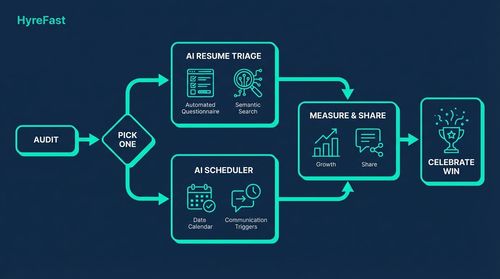
- Pick One: Based on your audit, choose the single biggest source of burnout and time waste (e.g., manual resume review or scheduling).
- Implement the Core AI Solution:
- If it's resume triage: Deploy automated eligibility gates (knockout questionnaire via SMS/email) + AI semantic search and ranking (using a tool like Eightfold, Phenom, or even a fine-tuned BERT model via API).
- If it's scheduling: Implement an AI scheduler (Calendly, X.ai) + automated communication triggers for interview confirmation and reminders.
- Measure and Share: Track the time saved per requisition and, crucially, ask recruiters: "Do you feel less drained by [task] now? Do you feel you have more time for [meaningful activity]?"
- Celebrate the Win: Use this success to build buy-in for further changes.
Phase 2: Build the Communication and Engagement Engine (Weeks 5-8)
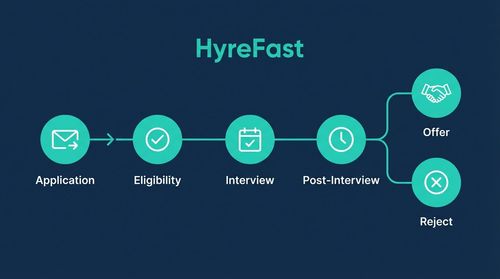
- Layer in Automation: Add automated SMS/email triggers for:
- Application received: "Thanks for applying! We'll review within 24h."
- Passed eligibility gate: "You've moved to the next step-schedule your interview here."
- Interview scheduled: "Your interview is confirmed for [date/time]. Here's what to expect."
- Post-interview: "Thanks for your time-we'll update you by [date]."
- Rejected (after screen): "We've decided to move forward with other candidates. We'll keep your profile for future opportunities."
- Deploy an AI Chatbot: For common questions on your career page or in the application flow (e.g., using Intercom, Drift, or a custom LLM-based solution).
- Train the Team: Ensure recruiters understand how the new tools work and how their role is shifting (e.g., from scheduler to relationship builder).
Phase 3: Elevate the Recruiter Role (Weeks 9-12)
- Redefine Success Metrics: Shift from activity-based KPIs (calls made, emails sent) to outcome-based metrics:
- Time from requisition to first qualified candidate
- Submission-to-interview ratio (quality of shortlist)
- Hiring manager satisfaction with shortlists
- Offer acceptance rate
- Recruiter self-reported sense of impact and engagement (via regular pulse surveys)
- Reclaim Time for High-Value Work: Explicitly encourage recruiters to use time saved from automation for:
- Deep candidate conversations (motivation, career coaching)
- Strategic client consultation (understanding unspoken needs, sharing market intelligence)
- Proactive talent pool building and engagement
- Providing thoughtful feedback to candidates (even those rejected)
- Train on High-Value Skills: Offer workshops on motivational interviewing, career coaching, market analysis, and consultative selling.
Phase 4: Embed, Monitor, and Continuously Improve (Ongoing)
- Make AI-Augmented Screening Standard: Require the use of automated eligibility gates, AI ranking, and automated communication/scheduling for all requisitions.
- Track Burnout Metrics: Regularly survey recruiters on:
- Emotional exhaustion (e.g., "I feel drained at the end of the workday")
- Depersonalization/cynicism (e.g., "I feel callous toward candidates/clients")
- Sense of accomplishment (e.g., "I feel my work makes a real difference")
- Intent to stay
- Monitor Placement Quality: Track:
- Time-to-fill
- Submission-to-interview ratio
- Hiring manager satisfaction with hires
- Offer acceptance rate
- Early turnover/performance of placed candidates (3/6-month check-in)
- Refine the AI-Human Handoff: Continuously evaluate where AI excels (objective gates, semantic ranking) and where human judgment is irreplaceable (assessing motivation, cultural fit, nuanced experience). Adjust the process accordingly.
- Foster a Culture of Psychological Safety: Encourage recruiters to speak up when they feel overwhelmed or when a tool isn't working as expected. Burnout prevention is as much about culture as it is about technology.
Conclusion: AI as the Antidote to Recruiter Exhaustion
Recruiter burnout is not an inevitable cost of doing business in talent acquisition. It is a symptom of a broken process-one that asks highly skilled, relationship-oriented professionals to spend their days on repetitive, low-value tasks that drain their energy and obscure their impact.
Artificial Intelligence, when implemented thoughtfully, is not a threat to the recruiter's role-it is its salvation.
By automating the eliminable (objective eligibility checks, scheduling, communication), augmenting the judgmental (AI-powered semantic search to surface high-signal candidates),and creating space for the irreplaceable (human judgment on motivation, cultural fit, and strategic counsel), AI screening can transform the recruiter from a burned-out processor into a revitalized strategic partner.
The true measure of success won't just be in the hours saved or the placements made-it will be in the recruiter who looks forward to their work again, who feels their expertise is valued, and who can see the tangible difference they make in people's lives and businesses' success.
In an industry built on human connection, there is no greater competitive advantage than a team of recruiters who are not just efficient, but energized, engaged, and emotionally present.
Start not by buying the latest AI tool, but by asking your recruiters: "What part of your job makes you feel most drained? What part makes you feel most alive?" Then, use AI to eliminate the first and expand the second. Your recruiters-and your bottom line-will thank you.
Explore HyreFast Solutions
Interview as a Service
Outsource first-round interviews to AI.
AI Interview Bot
AI bot that conducts and evaluates interviews 24/7.
Video Interview Software
One-way async video interviews with AI scoring.
Phone Screening
Automate first-round phone calls with AI.
Interview Assessment
Structured assessments with AI scoring and reports.
AI Interview Platform
End-to-end platform for AI interviews and analytics.