
The Real Reason Your Clients Keep Rejecting Your Shortlists (It's Not the Candidates)
Struggling with client shortlist rejections? Learn why recruitment candidates get rejected despite strong profiles and how better alignment, feedback loops, and market insights can improve hiring success and client trust.
Table of Contents

Introduction
You've done the work. You've sourced aggressively, screened meticulously, and presented what you believe is a strong, qualified shortlist.
Yet, time and again, your client comes back with feedback like: "These aren't quite right," "I need someone with more X," or worse, silence.
You start to question your candidates' quality, your sourcing channels, or even your own judgment. But what if the problem isn't the candidates at all?
In the high-stakes world of recruitment agency-client relationships, repeated shortlist rejection is rarely a talent problem-it's a process and alignment problem.
The candidates you're presenting may be perfectly capable individuals, but they're failing to meet the client's unstated, evolving, or poorly communicated needs.
This misalignment creates a frustrating cycle of wasted effort, eroded trust, and damaged profitability, where both parties feel the other isn't listening or understanding.
The real reason clients keep rejecting your shortlists isn't that your candidates are bad-it's that your agency is operating on outdated assumptions, missing critical context, or failing to adapt to the client's shifting reality.
Let's dissect the true, often hidden, drivers behind this pervasive issue and explore how to fix them.
1. The Job Description is a Fiction (Often Written in Haste)
The most fundamental flaw in the recruitment process is treating the job description (JD) as a complete, accurate, and static specification of the role. The Reality: JDs are frequently:
- Outdated: Copied from a previous requisition months or years old, not reflecting current tech stacks, responsibilities, or team structure
- Aspirational Wishlists: Written by hiring managers who list every skill they dream of having, not what's actually required for day-one success (e.g., demanding 5 years of experience in a technology that's only been around for 3)
- Vague or Misleading: Using buzzwords like "rockstar," "ninja," or "full-stack" without defining what they mean in context
- Misaligned with Actual Needs: The person who wrote the JD (often HR or a non-technical manager) may not understand the nuanced differences between, say, a Data Engineer and a Data Scientist, or the specific flavor of cloud expertise needed
- The Consequence: You're screening candidates against a moving target or a fantasy. A candidate who perfectly matches the JD might be wholly unsuitable for the actual work, while a truly great fit might be filtered out because their resume doesn't contain the exact, irrelevant keyword the JD demanded.
2. The Hiring Manager's Mental Model is Hidden and Evolving
Even when the JD is decent, the hiring manager often has a nuanced, internal picture of the ideal candidate that they struggle to articulate-or that changes as they see resumes.
- The Reality: The hiring manager's true criteria might include:
- Unspoken Cultural Nuances: "Someone who won't clash with our very direct communication style," or "Needs to be able to work independently with minimal guidance"
- Specific Project Context: "They need to have experience migrating legacy SQL databases to Snowflake in a regulated healthcare environment," a detail buried in a project update, not the JD
- Recent Negative Experiences: "Last hire was brilliant but couldn't handle ambiguity-need someone more process-oriented this time"
- Shifting Priorities: Midway through the search, a project delay might make "immediate availability" more critical than "perfect skill match," or a budget cut might shift focus to potential over experience
- The Consequence: You're presenting candidates based on Version 1.0 of the hiring manager's needs, while they're evaluating against Version 2.1, which you haven't seen. Your shortlist feels "off" because it's solving the wrong problem.
3. You're Missing Critical Context About the Team and Environment
A candidate's success isn't just about their skills-it's about how they fit into a specific team dynamic, management style, and organizational culture at a specific moment in time. The Reality: You might not know:
- Team Gaps and Strengths: Is the team strong in execution but weak in architecture? Do they need a mentor or a peer collaborator?
- Managerial Style: Does the hiring manager prefer autonomous self-starters or someone who checks in frequently? Is the team flat or hierarchical?
- Current Team Morale and Burnout: Is the team in crisis mode, needing someone who can hit the ground running under pressure, or are they in a growth phase, able to invest in onboarding?
- Unspoken Politics or Sensitivities: Is there a history of conflict with a particular vendor or methodology the candidate's background might inadvertently trigger?
- The Consequence: A candidate who is technically perfect might be rejected because they would clash with the team's working style or fail to fill the actual gap the manager feels most acutely-a gap you weren't aware of.
4. The Search Process Lacks True Iteration and Feedback Loops
Traditional agency workflows are often linear: take brief → source → screen → present → (if rejected) start over. This model assumes the initial brief was perfect and that learning happens only between discrete searches, not within them.
The Reality: Effective talent acquisition is an iterative, collaborative discovery process. The first shortlist should be a hypothesis, not a final answer. Each round of feedback should refine your understanding of:
- What the client really values vs. what they said they valued
- Which aspects of the role are flexible and which are truly non-negotiable
- How the candidate pool is responding to the role (e.g., are salary expectations wildly off?)
The Consequence: By presenting a "final" shortlist too early and not treating feedback as data for course correction, you miss the opportunity to align in real-time. Repeated rejection isn't failure-it's signal that you haven't yet closed the alignment gap.
5. You're Not Managing Expectations About the Market and Trade-offs
Clients often reject shortlists because they have an unrealistic view of what's available, affordable, or achievable in the current talent market. The Reality: The client might be:
- Unaware of Market Rates: Expecting senior-level skills at a junior-level salary
- Overestimating the Availability of Purple Squirrels: Believing a candidate with an exact, rare combination of skills, experience, and salary expectation is readily available
- Underestimating the Need for Compromise: Not realizing that for this role, they may need to prioritize potential over experience, or accept a slightly longer notice period for a stronger cultural fit
- Unaware of Competing Offers: Not understanding that top candidates have options and may require a compelling offer or process to secure
The Consequence: You present a shortlist of highly qualified, market-aligned candidates, and the client rejects them because they're holding out for a mythical ideal that doesn't exist at their price point-or they reject them because they're unwilling to make the necessary trade-offs to hire anyone in the current climate.
The Solution: Shifting from Order-Taker to Strategic Talent Partner
Fixing this issue requires moving beyond simply finding better candidates. It requires transforming the agency-client interaction into a dynamic, insight-driven partnership focused on mutual understanding and continuous alignment. Here's how to do it.
1. Replace the Job Description Briefing with a Role Discovery Session
Stop accepting the JD at face value. Instead, conduct a deep-dive conversation aimed at uncovering the true nature of the role. Ask Probing Questions:
- "If you could hire the perfect person today, what would their first 30,60, and 90 days look like?"
- "What are the top 1-2 problems this person needs to solve in the first six months?"
- "Think about your best performer in a similar role-what made them successful? What did they not need to know coming in?"
- "What are the biggest frustrations or gaps on the team right now that this hire should address?"
- "Is there anything in the JD you're willing to flex on if we find an exceptional candidate who's strong in other areas?"
Document and Validate: Summarize your understanding in a one-page "Role Reality Check" and get explicit confirmation from the hiring manager before you start sourcing.
2. Establish a Rhythm of Iterative Feedback and Co-Creation
Treat the search as a series of experiments, not a one-shot delivery.
- Present Early and Often: Don't wait for a "perfect" shortlist. After 2-3 days of sourcing, present 2-3 initial candidates as hypotheses and ask: "Based on these, are we targeting the right profile? What do you like/dislike?"
- Use Feedback to Refine, Not Just Replace: When the client says, "This candidate isn't quite right," dig deeper: "Is it the experience level? The specific technology? The communication style in their interview? Let's adjust our search parameters based on this."
- Share Market Intelligence Proactively: Regularly update the client on what you're seeing in the market: "We're noticing that candidates with this exact skill set are expecting 20% more than your budget-should we adjust the scope or the compensation expectation?"
- Create a Feedback Loop: After each interview round, hold a quick 15-minute debrief to capture the hiring manager's impressions and adjust the next wave of sourcing.
3. Invest in Understanding the Team and Organizational Context
Go beyond the hiring manager to gather a holistic view.
- Ask for Team Insights: "Can you tell me about the team's current composition and working style? Are they more collaborative or independent?"
- Seek Context on Recent Events: "Has there been any recent turnover or project shift that's influencing what you're looking for in this hire?"
- Leverage Your Network: If you've placed candidates with this client before, discreetly ask former placements (if appropriate and ethical) about the team culture and manager style-this can provide invaluable context.
- Observe (If Possible): For long-term engagements, see if you can attend a team meeting (as an observer) to get a feel for the dynamics.
4. Become a Trusted Advisor on Market Realities and Trade-offs
Your value isn't just in finding candidates-it's in helping the client make informed decisions.
- Educate Gently but Firmly: Use data from your sourcing efforts to illustrate market realities: "Out of 50 applicants we've seen, zero have all five of these specific certifications at your salary range. Let's discuss which are truly essential."
- Frame Trade-offs Clearly: "We can find someone who matches the JD exactly in about 6-8 weeks, or we can find a strong cultural fit with 80% of the skills in 2-3 weeks who can learn the rest on the job. Which timeline and trade-off works better for your business needs?"
- Manage Expectations on Timeline and Effort: Be transparent about how long a truly niche search might take, or how much effort is required to engage passive candidates.
5. Leverage Technology to Surface Hidden Alignment (and Misalignment)
Use your tools not just to find candidates, but to understand the client's evolving needs.
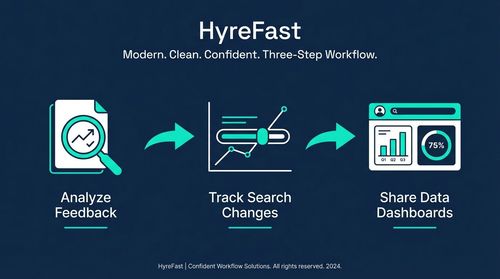
- Analyze Feedback Patterns: Use notes from interview debriefs to identify recurring themes in rejection reasons (e.g., "salary too high," "lacks X experience"). This reveals what the client is truly prioritizing.
- Track Changes in Search Parameters: If you're constantly having to widen the search radius or relax experience requirements, it signals a misalignment between the initial brief and market/client reality.
- Share Data Dashboards: Provide the client with a simple view of the funnel: applications received, screened, shortlisted, interviewed, and offer status. This builds transparency and shows you're working diligently, even if the perfect match is elusive.
Conclusion: Alignment is the Ultimate Competitive Advantage
The frustration of repeated shortlist rejection is rarely a reflection of your candidates' quality or your sourcing prowess. It is, almost invariably, a symptom of a misalignment between your agency's understanding of the role and the client's actual, often unspoken, needs.
By shifting from a transactional, order-taking mindset to a collaborative, discovery-driven partnership, you transform the recruitment process.
You stop guessing at what the client wants and start uncovering it through deep questioning, iterative feedback, contextual understanding, and honest market education.
The agencies that will thrive in 2025 and beyond aren't just the ones with the best AI sourcing tools or the largest databases.
They're the ones who have mastered the art of alignment-who understand that presenting a great candidate is only half the battle; the other half is ensuring the client recognizes that candidate as the solution to their real problem.
When you solve for alignment, you don't just fill roles-you build trusted partnerships that withstand the inevitable shifts and challenges of the talent market.
And in that space, shortlist rejection becomes the rare exception, not the rule.