
What 1,000+ Startup Interviews Taught Us About Hiring Mistakes
Learn the most common hiring mistakes startups make from 1,000+ interviews and how AI interview platforms improve candidate screening.
Table of Contents

Introduction
*In today's fast-paced ecosystem, a startup's trajectory is often defined by the team it builds. Yet, navigating the hiring process feels like assembling a complex puzzle while racing against the clock. Across social media platforms, founders frequently voice a familiar struggle: the immense pressure to hire quickly versus the long-term cost of a mis-hire.
The sentiment is clear-speed often trumps diligence, but the data suggests this compromise is a primary reason many promising ventures falter. After analysing patterns from over a thousand interviews and synthesising findings from industry reports and academic research, a clear picture of systemic mistakes emerges.
In this article, we will dissect the most common hiring pitfalls, explore the technical limitations of modern hiring tools, and outline actionable, data-informed strategies to build a more resilient and effective team.*
The High Stakes of Getting it Wrong
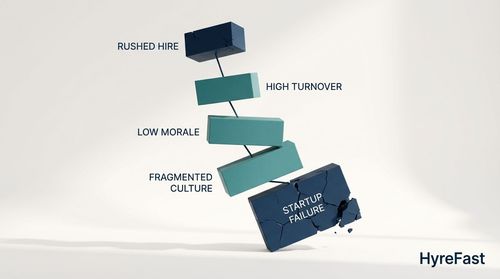
Startup failure is a complex equation, but one factor consistently stands out: the people. A study highlighted in sources like Forbes and Entrepreneur underscores that startups led by founders with significant entrepreneurial experience (termed 'L5') are 3.79 times more likely to succeed than those led by novices ('L1').
This statistic isn't just about the founding team; it reflects a broader principle-the ability to identify, attract, and nurture the right talent is a core competitive advantage. The pressure to scale quickly, however, often leads to shortcuts.
A vague job description written in haste, an interview process that prioritizes technical prowess over cultural fit, or a non-existent onboarding plan might solve an immediate need, but they plant the seeds for long-term dysfunction, including high turnover, low morale, and ultimately, a fragmented company culture.
The industry conversation, amplified on social media, often centres on automating this process. The promise of AI-driven hiring tools is alluring: sift through thousands of resumes, identify top candidates based on keywords, and drastically reduce time-to-hire. However, this technological promise comes with significant caveats that many startups overlook.
The Illusion of the Perfect Candidate: Where AI Hiring Tools Falter

The initial excitement around using Large Language Models (LLMs) for candidate screening is now meeting a more nuanced reality.
Academic research points to a critical flaw: baseline LLMs "consistently overpredict startup success and struggle under realistic class imbalances, largely due to overreliance on founder claims."
Translating this to hiring, it means that AI tools trained on polished LinkedIn profiles and boastful resumes tend to select for candidates who are good at describing achievement, not necessarily those who have executed it.
These models often lack the context to evaluate soft skills-adaptability, communication, and collaborative problem-solving-which are the lifeblood of an early-stage startup where roles are fluid. An overemphasis on technical skills, a common mistake noted across industry analyses, is precisely what these naive AI systems exacerbate.
They optimise for a checklist of programming languages or tools but fail to assess whether a candidate can pivot when a product roadmap changes entirely next quarter.
Furthermore, these systems can inadvertently perpetuate a lack of diversity and inclusion by learning biases present in the historical hiring data they are trained on, leading to a homogenised team that lacks the creative friction necessary for breakthrough innovation.
This presents a clear trade-off: optimising for speed and volume via automation may increase the risk of poor cultural fit and homogeneity. The solution is not to abandon technology but to use it more intelligently.
Beyond the Checklist: A Multi-Agent Approach to Candidate Evaluation
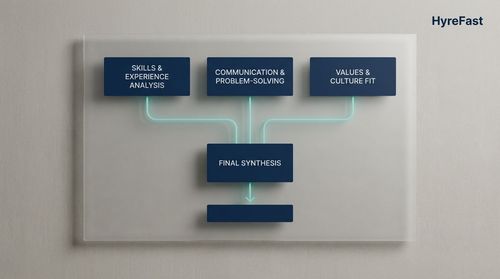
So, how can startups leverage data without falling into these traps? Emerging research proposes a more sophisticated framework: a multi-agent approach combined with discriminative machine learning.
Instead of a single AI making a pass/fail decision, this method involves several specialised "agents" analysing different aspects of a candidate's profile. Imagine a system where:
- Agent 1 parses the hard skills and technical experience from the CV.
- Agent 2 analyses communication patterns and problem-solving approaches from cover letters or written assignments.
- Agent 3 assesses cultural and value alignment by comparing stated values and project interests with the company's core principles.
A final discriminative model then weighs the outputs of these agents, trained on actual hiring outcomes (e.g., which candidates, based on these multi-faceted signals, became high performers after 6 months?).
This mitigates the limitations of a standard LLM by forcing a more holistic evaluation, reducing overreliance on any single data point. For a startup, this conceptual model can be implemented even without complex AI-it’s a framework for building a hiring panel with diverse perspectives, each focusing on a different aspect of the candidate, whose feedback is then synthesised by a hiring manager trained to look for specific, performance-linked indicators.
From Theory to Practice: Fixing the Eight Core Mistakes
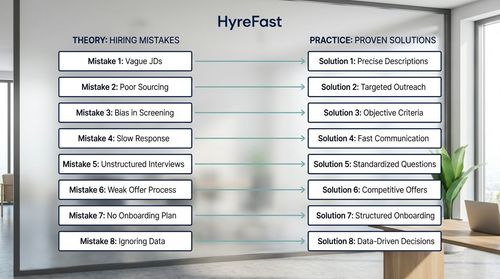
The technological discussion informs the practical steps. Let's map the common hiring mistakes identified in our analysis to concrete, actionable solutions grounded in this more nuanced understanding.
- Mistake: Lack of Clear Job Descriptions
- Solution: Develop descriptions that detail not just responsibilities but the problems the hire will solve. Instead of "5 years of Python," specify "will architect the backend for our new real-time analytics feature." This clarity attracts candidates motivated by challenges and sets precise expectations.
- Mistake: Overemphasis on Technical Skills
- Solution: Emphasise soft skills with structured behavioural questions. "Tell me about a time you had to explain a complex technical concept to a non-technical stakeholder" reveals more about teamwork and communication than a tricky coding puzzle.
- Mistake: Inadequate Onboarding Processes
- Solution: A comprehensive onboarding programme is an investment, not a cost. Assign a buddy, schedule meet-and-greets with key team members, and define 30/60/90-day goals. This transforms a steep learning curve into a ramp, boosting productivity and retention.
- Mistake: Insufficient Training and Development
- Solution: Prioritise long-term growth. Even a small budget for online courses or a monthly "learning day" signals a commitment to employee growth, countering the short-termism that leads to stagnation.
- Mistake: Poor Communication and Feedback
- Solution: Foster open communication with regular, structured check-ins. Implement weekly one-on-ones and quarterly performance reviews that are dialogues, not monologues. This builds trust and ensures issues are surfaced early.
- Mistake: Inadequate Performance Management
- Solution: Implement clear, transparent systems. Use objective key results (OKRs) to align individual goals with company objectives. This creates consistency and fairness in evaluations.
- Mistake: Lack of Diversity and Inclusion
- Solution: Prioritise D&I actively. Use blind recruitment tools for initial screening, source from diverse talent pools, and train interviewers on unconscious bias. A diverse team is not a quota to fill; it's a strategic advantage for innovation.
- Mistake: Poor Employee Engagement and Retention
- Solution: Implement engagement strategies rooted in recognition and purpose. Regular feedback, recognition of achievements, and a clear connection between an individual's work and the company's mission are powerful motivators that reduce costly turnover.
Key Conclusions for the Pragmatic Builder
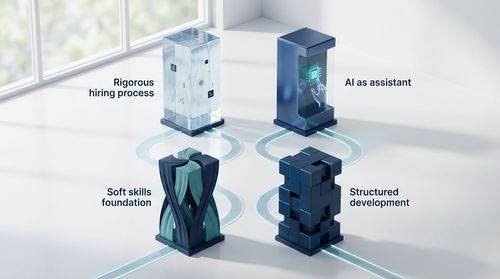
- Founder experience matters, but a systematic hiring process is a multiplier. The L5 founder advantage is real, but it can be replicated by instituting rigorous, data-informed hiring practices that go beyond gut feeling.
- AI is an assistant, not a replacement. Naive LLM-based screening tools are prone to overconfidence and bias. A multi-faceted evaluation-whether automated via a multi-agent system or manually through a diverse interview panel-yields far better results.
- Soft skills are your scaling infrastructure. In the dynamic environment of a startup, adaptability, communication, and collaboration are more predictive of long-term success than any single technical skill listed on a CV.
- Onboarding and development are non-negotiable investments. Jugaad solutions might work for a server fix, but they rarely scale for people management. A structured approach to integrating and growing talent is crucial for retention and performance.
Future Directions
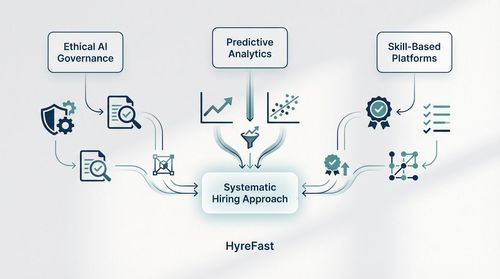
The intersection of hiring and technology will continue to evolve. Key areas to watch include:
- Ethical AI Governance: Developing frameworks to audit and mitigate bias in hiring algorithms will become a standard practice, moving from a technical challenge to a core business priority.
- Predictive Analytics for Team Formations: Research will likely shift from predicting individual success to predicting how a candidate will perform within a specific team composition and company culture stage.
- Skill-Based Hiring Platforms: The focus may move further away from traditional credentials towards verified, skill-based assessments and micro-credentials, providing a more accurate picture of a candidate's capabilities.
The lesson from a thousand interviews is not that hiring is easy to fix, but that its complexity demands a thoughtful, systematic approach. By learning from these common mistakes, startups can transform hiring from a recurring source of anxiety into a reliable engine for growth.
References
- [1] "The Top 10 Hiring Mistakes Startups Make." Forbes, 2022.
- [2] "Common Hiring Mistakes That Can Hurt Your Startup's Success." Entrepreneur, 2023.
- [3] Research on founder experience levels (L1 vs. L5) and startup success rates.
- [4] Research on limitations of Large Language Models (LLMs) in predicting success under class imbalance.
- [5] Research proposing a multi-agent AI approach combined with discriminative machine learning for improved prediction.